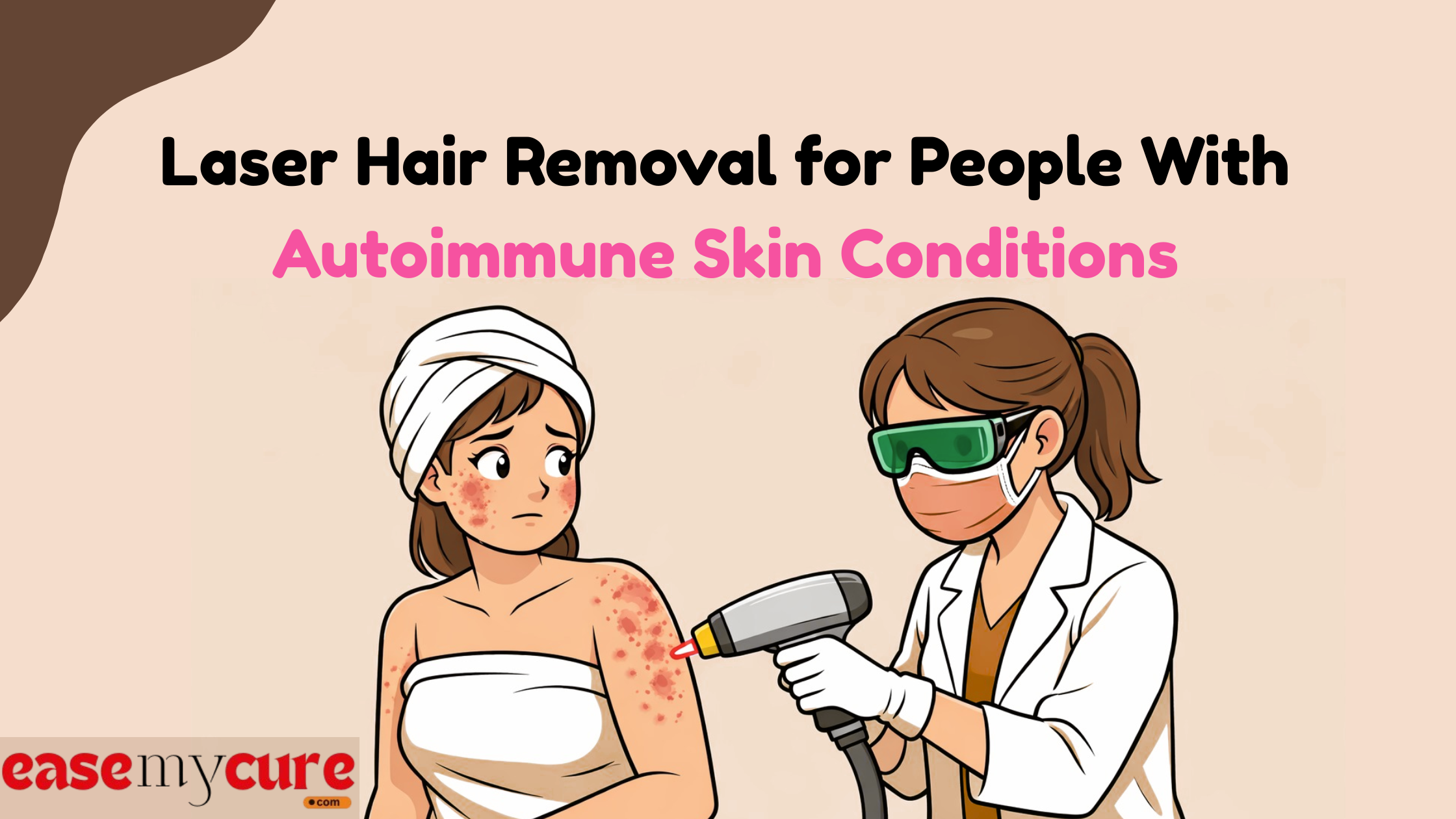

Laser hair removal can sound simple and low-maintenance, but people with autoimmune skin conditions often need to approach it with a bit more care. With an immune system that already reacts more easily, even mild irritation may last longer. It can also worsen current symptoms or lead to changes in pigment or skin texture.
Autoimmune skin can react quickly and can be easily inflamed. It may also take longer to settle after irritation. Laser hair removal uses targeted heat, so clinics usually take extra precautions for people with autoimmune conditions.
This guide explains laser hair removal for autoimmune conditions in simple terms. It shows how autoimmune skin disorders can affect risk and recovery. It also describes what “safe” often looks like in real clinics. Finally, it outlines clear steps for skin care before and after treatment.
What Are Autoimmune Skin Conditions?
Autoimmune skin conditions occur when the immune system mistakenly attacks the skin and related tissues. The specific symptoms depend on what the immune system targets. It may affect pigment cells, connective tissue, hair follicles, or the skin barrier. This can lead to visible changes in skin colour, texture, or hair growth. Common autoimmune skin conditions include vitiligo, lupus (including cutaneous lupus), scleroderma, and alopecia areata.
How Laser Hair Removal Works on Sensitive Skin
Laser hair removal uses focused light to heat and disable hair follicles, which slows future growth. The laser targets melanin (pigment) in the hair shaft and carries heat to the follicle. Cooling protects the skin surface, so providers often start with lower settings for sensitive skin.
Results depend on how laser energy interacts with melanin in hair versus skin. Dark, coarse hair absorbs more energy and usually responds better. Darker skin has more melanin in the surrounding skin, which can absorb heat and increase the risk of redness, burns, or pigment changes. In one prospective study (60 patients), average hair reduction was 75.07% at 6 months after treatment.
Is Laser Hair Removal Safe for People With Autoimmune Skin Conditions?
Laser hair removal is a medical procedure. It uses concentrated light to heat the hair follicle. This heat triggers a mild, controlled injury in the skin.
When someone has an autoimmune skin condition, their skin can react more strongly to laser hair removal for autoimmune conditions. Skin that is not affected often tolerates the treatment without much trouble. Autoimmune-affected skin may react more strongly. It can also stay irritated longer, especially when inflammation already runs high.
Recovery may take more time as well. Some clinics note that healing can move more slowly in people with autoimmune-related sensitivity. Redness may also last longer than expected. For that reason, clinics often use a gentler protocol and focus closely on aftercare in these cases.
How to Reduce Risk With Autoimmune Conditions
People with an autoimmune condition can often still get laser hair removal, but they may need a bit more planning. The condition itself, the risk of a flare, and any medications can affect how the skin reacts to heat and light. The steps below help the client and clinician build a safer, more personalised plan.
Consult The Healthcare Provider
Before booking laser hair removal for autoimmune conditions, a person with this condition should first speak with the clinician who manages their care (a dermatologist, rheumatologist, or both). Laser safety depends on more than how the skin looks. Disease activity and medications can change how the skin reacts to heat and light, and how well it heals afterwards. They should discuss the following:
- Diagnosis and flare status: Which autoimmune condition they have, how active it has been recently, and which body areas feel most sensitive.
- Medications and photosensitivity: Any medications that can increase light sensitivity or slow healing. The clinician may advise waiting, changing timing, or adjusting the plan.
Skin tone, hair colour, and treatment area can affect results and risk, including a higher chance of pigment changes in some areas. If the clinician feels it is a reasonable option, the person can ask for a patch test, longer gaps between sessions, and whether a dermatologist-led clinic would be a safer choice.
Patch Testing & Customised Protocols
Patch testing helps lower the risk for people with autoimmune skin conditions. Instead of treating a large area right away, the clinic treats a small spot first. The clinician then checks how the skin responds over the next few days. In some cases, they may watch the area for weeks, depending on the condition.
- Conservative settings: The clinician uses lower energy and careful cooling to help reduce the chance of inflammation.
- Longer gaps between sessions: The clinic schedules more time between sessions so the skin can settle fully before the next treatment.
- Smaller treatment areas: The clinician starts with smaller areas, especially when the person has had flares after irritation.
Pre- and Post-Treatment Tips for Autoimmune Skin
Autoimmune skin conditions can make skin react faster and more strongly than usual. The tips below can help keep skin calm, reduce side effects, and clarify when to check in with a provider.
Before Treatment
Before the appointment, the goal is to keep the skin as steady as possible. Irritation before treatment can increase the chance of redness, burning, or a flare during or after the session. These steps can help support a smoother result.
- Avoid sun exposure and tanning beds: The American Academy of Dermatology advises avoiding direct sunlight on treated skin and avoiding indoor tanning to lower the risk of side effects.
- Pause exfoliating skincare products: Strong actives can make skin more sensitive. Many clinics recommend pausing irritating products, such as retinoids or strong acids, before treatment. The provider should explain what to stop and when to stop it.
- Share medication and flare history with the clinician: The clinician should know the diagnosis, any recent flares, and all medications being taken.
After Treatment
After treatment, people can keep their skin calm and protected by following these simple steps:
- Avoid heat and rubbing on the treated area: For the first few days, people should skip hot baths, saunas, and intense workouts. Heat and friction can worsen irritation. They should keep the area cool and avoid touching it as much as possible.
- Pay attention to how the skin feels: Some redness is normal, and mild itching can happen. If redness or itching lasts longer than the provider said to expect, people should contact the provider. They should not ignore symptoms or push through to the next session.
Choosing the Right Clinic for Autoimmune-Safe Laser Treatment
If someone has autoimmune skin, the “right clinic” treats laser hair removal for autoimmune conditions like a medical procedure, not a quick beauty add-on. Dermatology sources and professional organisations describe it the same way. They focus on training, device choice, and aftercare because these details can lower risk. Here are the non-negotiables to look for in a safe laser treatment clinic:
Medical Supervision
A clinic should make it easy to reach a dermatologist if a reaction happens. It is even better when a dermatologist stays involved from the start. The clinic should explain a clear plan for what they will do if a flare-up occurs.
Patch Testing as Standard
A clinic should offer a patch test before a full session. If a clinic refuses to patch test autoimmune skin, that is a red flag.
Transparency About Contraindications and Limits
A clinic should clearly explain what it will not treat and why. Some clinics list systemic autoimmune diseases as contraindications. That may not be an absolute rule in every case, but it still shows an important point: risk varies by person. A patient should get an honest conversation about their situation, not vague reassurance.
For people comparing options, EaseMyCure can help keep the process safety-first. It can help them focus on medical oversight, patch testing policies, and clear communication.
Compare Clinics That Follow Medical Laser Protocols
Laser hair removal for autoimmune conditions may suit some people with such skin conditions, but it needs a careful plan. It helps first to understand how the condition affects skin sensitivity and healing. Treatment should be scheduled only when the skin is calm, not during an active flare. Before a full session, the clinic should complete a patch test to check how the skin reacts. After treatment, simple and cautious aftercare can support healing and lower the risk of pigment changes.
For people who want support in choosing a provider, EaseMyCure can help compare clinics that follow medical laser precautions. This helps people choose based on clear information and a safety-first approach.