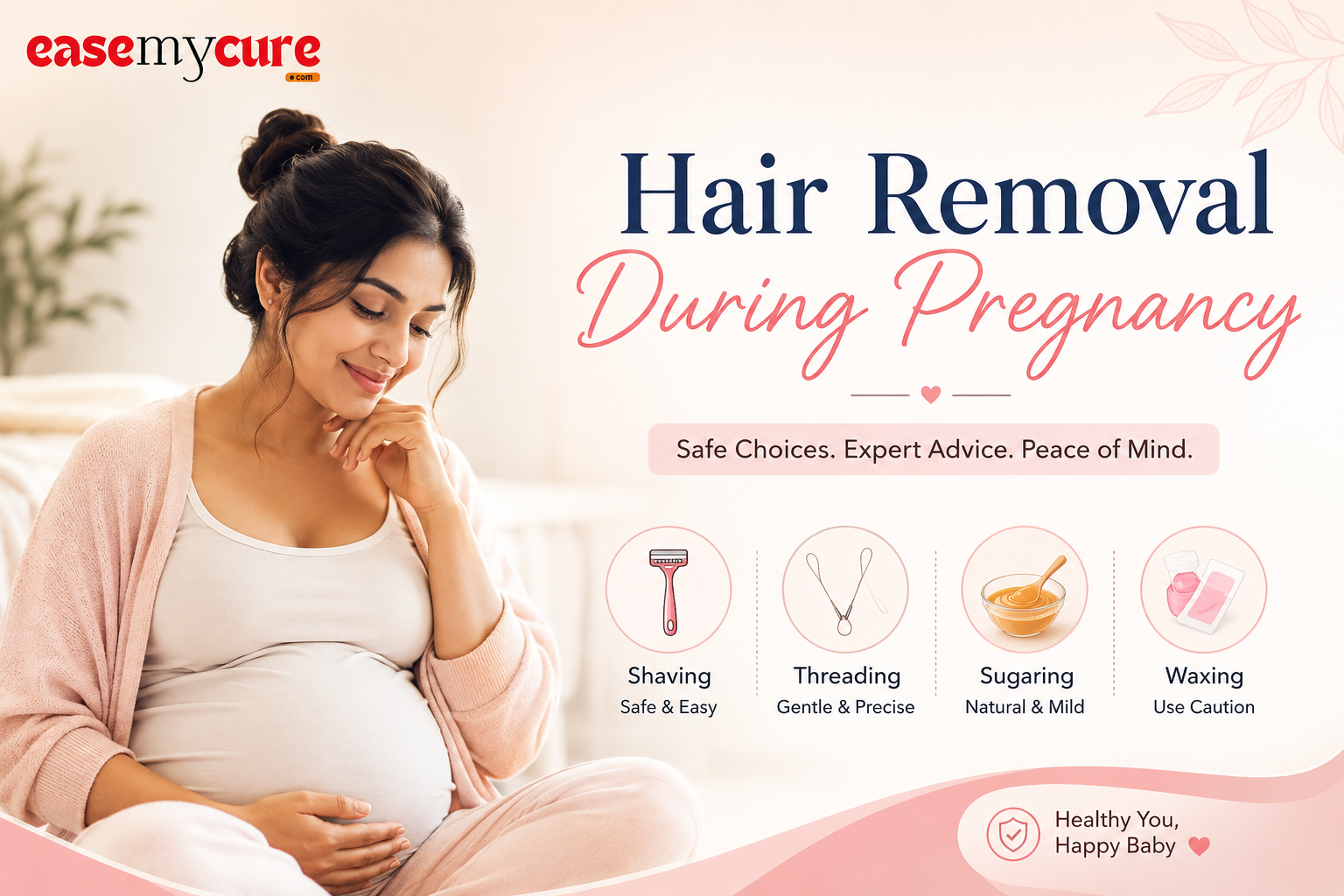

Pregnancy brings many beautiful changes to women as the body prepares itself to deliver a tiny human. Since your body adjusts to the new experiences, you may notice changes like faster or thicker body hair growth, which is a completely normal experience that might seem unfamiliar at the moment.
For many women, higher hormone levels lead to thick, fast-growing body hair. If this is your first experience with such changes, you might be wondering if laser hair removal during pregnancy is a good idea.
In this blog, we’ll help you understand what’s known, what remains uncertain, and what dermatologists actually recommend. By the end, you’ll be confident in managing unwanted hair safely while expecting the apple of your eye.
Understanding Hair Growth Changes During Pregnancy
Pregnancy brings major hormonal shifts in a woman’s body; these internal changes directly influence how your hair grows. Understanding the root cause makes it easier to make sense of the symptoms and the feelings that often come with them.
Why Hair Growth Increases During Pregnancy
When you are pregnant, hormones like oestrogen, androgens, and progesterone really kick into high gear. They are busy with behind-the-scenes activities to help your baby develop, but they inadvertently bring some changes to your own body hair.
- Oestrogen keeps your hair in the growth phase longer, so you don’t shed as much as usual.
- Androgens spark new hair growth, sometimes in places you are not used to seeing thicker hair.
How Pregnancy-Related Hair Changes Affect Your Grooming Choices
Even though these changes are completely normal, they can still feel surprising or unsettling. Many women find their morale sinking when hair appears in new places, or are frustrated that their usual grooming routine isn’t enough.
These changes affect up to 90% of pregnant women through physiological skin alterations. Trying to keep up with faster hair regrowth during pregnancy can boggle your mind when your body and emotions are already all over the place. If you are feeling a bit off because of it, that’s totally normal.
At some point, you might catch yourself thinking about longer-lasting fixes, like laser hair removal, to make life a little easier. If you’ve never tried laser before, it’s no wonder you are curious now. Wanting a smoother, low-maintenance solution is completely understandable.
What Exactly is Laser Hair Removal?
Laser hair removal works by sending light into the pigment of a hair follicle. That light turns into heat, which damages the follicle over time and reduces future growth.
As a popular cosmetic treatment, most adults can undergo it safely. But pregnancy changes how your skin reacts to heat, hormones, and pigmentation.
That’s why the question “Is laser safe for pregnant women?” doesn’t have a simple yes-or-no answer.
Is Laser Hair Removal During Pregnancy Safe?
There is currently no confirmed evidence that laser hair removal during pregnancy harms a woman or her baby, but there isn’t enough research to say it’s completely safe either. As laser-related studies on pregnant women are not allowed due to ethical concerns, their safety can’t be fully confirmed.
However, understanding the pregnancy laser treatment risk is essential as skin sensitivity changes. For this reason, most dermatologists take a balanced and cautious approach: there’s no known harm, but not enough information to call it risk-free confidently.
With increased blood flow and hormonal shifts, some women experience temporary side effects such as mild irritation, swelling, redness, or patches of pigmentation. These effects affect the mother’s skin only and do not harm the fetus.
Hormones may also reduce the effect of laser treatments. Many women notice new or faster hair growth during pregnancy, so the long-term results you’d normally expect from laser may not hold as well.
What Dermatologists Recommend (Verified Opinion via EaseMyCure)?
When it comes to pregnancy, dermatologists follow one simple rule: better safe than sorry. Following a dermatologist's advice during pregnancy helps you choose options that protect both your comfort and your skin’s health.
- Postpone laser hair removal until after delivery.
- Wait until after breastfeeding to resume treatment.
- Avoid laser touch-ups, even if you have had ongoing sessions before pregnancy.
Once the hormones are stabilised and the skin goes back to normal, laser treatments can be safer, more comfortable, and effective.
Safe Hair Removal Treatments During Pregnancy
If you are exploring safe beauty treatments in pregnancy, gentle, short-term methods are usually recommended until you can consider long-term solutions laser solutions, postpartum. Here are a few options:
- Threading or tweezing works well for small spots, like your face.
- Waxing can be done if your skin is not extra sensitive. Always test a small patch first.
- Trimming keeps things neat and is gentle for areas like your bikini line or underarms.
These are all solid choices until you can look into longer-term treatments after pregnancy. However, stay away from chemical hair removal creams right now; they are more likely to irritate your skin.
When to Prepare for Postpartum Laser Treatments?
Once your doctor confirms it’s safe to resume cosmetic treatments, you can begin preparing for postpartum laser hair removal. Your timeline largely depends on whether you are breastfeeding and how quickly your hormones stabilise after birth.
Things to Keep in Mind if You’re Breastfeeding
Breastfeeding keeps some hormones slightly elevated, which can lead to slower hair-growth regulation, mild skin sensitivity (especially around the chest), and less predictable shedding. Dermatologists generally recommend waiting until breastfeeding has reduced or stabilised, as this improves treatment comfort, reduces sensitivity-related side effects, and leads to more consistent results.
Suggestions for Non-breastfeeding Mothers
If you are formula-feeding or have stopped breastfeeding early, your hormones usually stabilise sooner. Once your postpartum check-up is cleared and your skin feels back to normal, you may be able to start laser earlier.
Dermatologists typically suggest waiting 6-12 weeks postpartum so skin sensitivity settles, hair growth cycles stabilise, and any stretch marks or pigmentation have time to calm. This helps ensure smoother, longer-lasting results.
Once that’s out of the way, you can start with facial hair removal with a laser before moving on to a full-body treatment, if needed.
Final Takeaway
Pregnancy is a season of change with some wonderful and some challenging moments. Unwanted hair growth is incredibly common, and you are not alone in feeling frustrated by it.
But when it comes to laser hair removal during pregnancy, the safest and most dermatologist-approved approach is to wait. When you are ready after delivery and perhaps after breastfeeding, you can revisit laser hair removal under safer, more stable conditions.
Reach out to EaseMyCure for safe guidance and verified clinic recommendations whenever you feel ready from within.