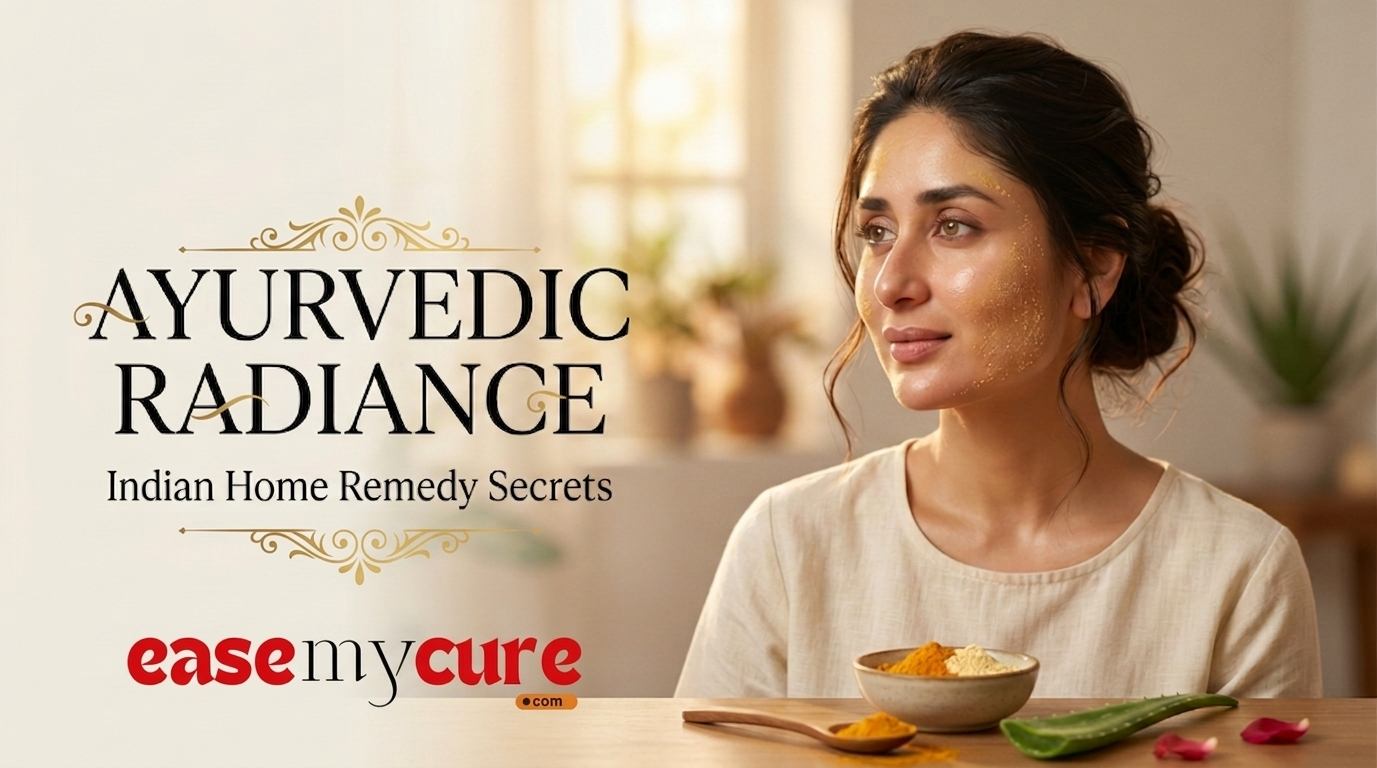

When it comes to a skin tone that appears perpetually "lit from within," the Kareena Kapoor skincare routine is, of course, the gold standard. While all A-listers claim to owe their million-dollar skin to thousand-dollar serums, Bebo has gone on record for crediting her poreless, glowing skin to the simple ingredients in her own kitchen.
What's so appealing about the "Kapoor glow" is that it's all about relying on ancestral wisdom to ensure skin that remains resilient. We decided to put this legendary DIY approach to the test by conducting a trial of this simple haldi besan face mask.
What Kareena Kapoor's Kitchen Skincare Routine Reportedly Includes
The architectural base of the Kareena Kapoor skincare routine is based on Ayurvedic medicine. In a number of public confessions, including the 2020 lockdown, Kareena revealed her "magic" formula.
The routine consists of a careful combination of sandalwood powder (chandan), turmeric (haldi), vitamin E, and milk or curd. Sandalwood acts as a cooling agent that counteracts inflammation in the skin. Turmeric provides antiseptic properties.
Vitamin E oil provides a concentrated amount of antioxidants that counteract the effects of environmental stressors. Lastly, milk or curd acts as a carrier agent that provides a small amount of lactic acid for exfoliation and vitamin D for the stimulation of collagen synthesis.
The 30-Day Challenge - How We Tested the Haldi-Besan Mask
In order to prove the efficacy of this tradition, we decided to monitor a person with a combination of Indian skin, meaning that this person has an oily T-zone and is prone to urban pollutants. At the baseline, this person was suffering from dermal fatigue and slight congestion.
The methodology required a turmeric face mask India, consisting of 2 tablespoons of besan, a pinch of turmeric, and yogurt. The application was to be done three times a week to avoid dryness caused by alkalinity.
Each treatment consisted of a 15-minute duration, followed by a lukewarm rinse and application of a non-comedogenic moisturizer. In the initial stages, we concentrated on "felt" sensations, such as the coolness of the yogurt. Over time, we began to concentrate on changes in sebum regulation and the gradual resolution of skin blemishes.
The Science Behind Haldi (Turmeric) for Indian Skin
The addition of turmeric in the Kareena Kapoor skincare routine is backed by the biochemistry of the primary bioactive compound in turmeric, which is curcumin. Curcumin is a lipophilic polyphenol compound that has a profound impact on dermal signaling.
In the context of Indian skin, which is more prone to chronic inflammation and post-inflammatory hyperpigmentation, the effect of turmeric in preventing inflammatory markers has been statistically significant.
Research indicates that curcumin can act on the NF-κB pathway, reducing the synthesis of pro-inflammatory cytokines like IL-6 by as much as 76%. This anti-inflammatory action is the mechanism through which this DIY face mask Indian skin ingredient can soothe inflammation and heal acne lesions on the face. Moreover, it acts as a natural inhibitor to the enzyme tyrosinase, which produces melanin.
The Science Behind Besan (Chickpea Flour) as a Natural Exfoliant
Besan (gram flour) provides a dual-action mechanism of deep cleansing and mechanical exfoliation. Unlike synthetic micro-beads, besan contains natural surfactants called saponins. These phytochemicals emulsify sebum and lift debris without disrupting the skin's delicate lipid bilayer.
The fine, slightly granular structure of besan facilitates the removal of dead cells from the stratum corneum, preventing the follicular occlusion that leads to comedones.
While besan is naturally rich in zinc and vitamin C, it does have an alkaline pH. Because human skin is naturally acidic (pH 4.7 to 5.5), the Kareena beauty secret wisely balances besan with acidic components like yogurt or lemon juice. This neutralization ensures the skin's acid mantle remains protected while the "alkaline drift" is minimized.
Week-by-Week Results of the 30-Day Trial
Week 1: The first week was marked by immediate tactile improvements. Following the first application, there was a notable smoothing of surface roughness, attributed to the removal of dead cells by the besan. The "glow" was evident within 24 hours, owing to enhanced localized circulation.
Week 2: In the second week, the oil-absorbing properties of besan dominated. There was a notable reduction in "mid-day shine" in the T-zone, implying that the saponins were effectively controlling sebaceous glands.
Week 3–4: The final weeks saw a move towards inflammatory control. Redness around the nose started to clear. Skin resilience is also improved. By Day 30, the subject displayed a healthy baseline radiance. Although underlying pigmentation remains, this takes a 60-90 day cycle. However, the superficial dullness has been completely corrected.
How to Make the Perfect Haldi-Besan Mask - 3 Variations by Skin Type
- Dry and Dehydrated Skin:
Use 2 tbsp besan, a pinch of turmeric, 1 tbsp honey, and 1 tsp almond oil. The honey acts as a humectant, retaining the moisture in the skin, whereas the fatty acids in almond oil lock the moisture in the skin by providing an occlusive layer.
- Oily and Acne-Prone Skin:
Take 2 tbsp of besan, 1 tbsp of rose water, and 1 tsp of sandalwood powder. Rose water is a mild astringent, and sandalwood is a powerful cooling agent and anti-acne agent.
- Sensitive and Reactive Skin:
Combine 1 tbsp besan, a pinch of turmeric, and 2 tbsp fresh aloe vera for skin repair. This variation focuses on anti-inflammatory carriers to soothe the dermal microbiome. For more ideas, explore other DIY face packs for glowing skin.