
You’ve likely spent months (if not years) scouting the perfect heritage venue, debating the exact shade of "Sabyasachi red" for your lehenga, and shortlisting the finest caterers. But while the décor and the menu are being perfected, a silent stressor is likely lurking: grooming during wedding season.
For most Indian couples, the days leading up to the wedding involve multiple rituals, long hours, heavy fabrics, jewellery, stage lighting, and constant social interaction. Traditional grooming methods such as waxing, threading, and shaving often become unreliable at this stage.
Waxing can trigger redness or “strawberry skin” close to Mehendi, while repeated shaving for grooms can cause visible irritation during long ceremonies. If your focus is on getting laser hair removal before wedding, this guide is here to help you plan, so that your only focus on the big day is the celebration.
Why Traditional Grooming Methods Fail During Indian Weddings
Waxing requires a "growth period," meaning you have to endure visible stubble during your final fittings or pre-wedding shoots. Furthermore, Indian skin, which often falls in Fitzpatrick types IV to VI, can develop dark spots after repeated shaving or hot waxing. Laser hair removal before wedding events helps prevent this by permanently reducing hair thickness and overall density.
By the time you reach your wedding week, you won't be rushing for a last-minute salon appointment. Instead, you’ll have skin that is naturally smooth, even-toned, and ready for high-definition cinematography.
How Far in Advance Should You Start Laser Hair Removal?
There are many myths circling around laser hair removal, but the most common myth is thinking laser hair removal (LHR) is very painful, though it’s not. To truly solve the problem of unwanted hair, you must respect the biological growth cycle.
At any given moment, only about 15–20% of your hair is in the "Anagen" or active growth phase. This is the only phase where the laser can effectively destroy the follicle.
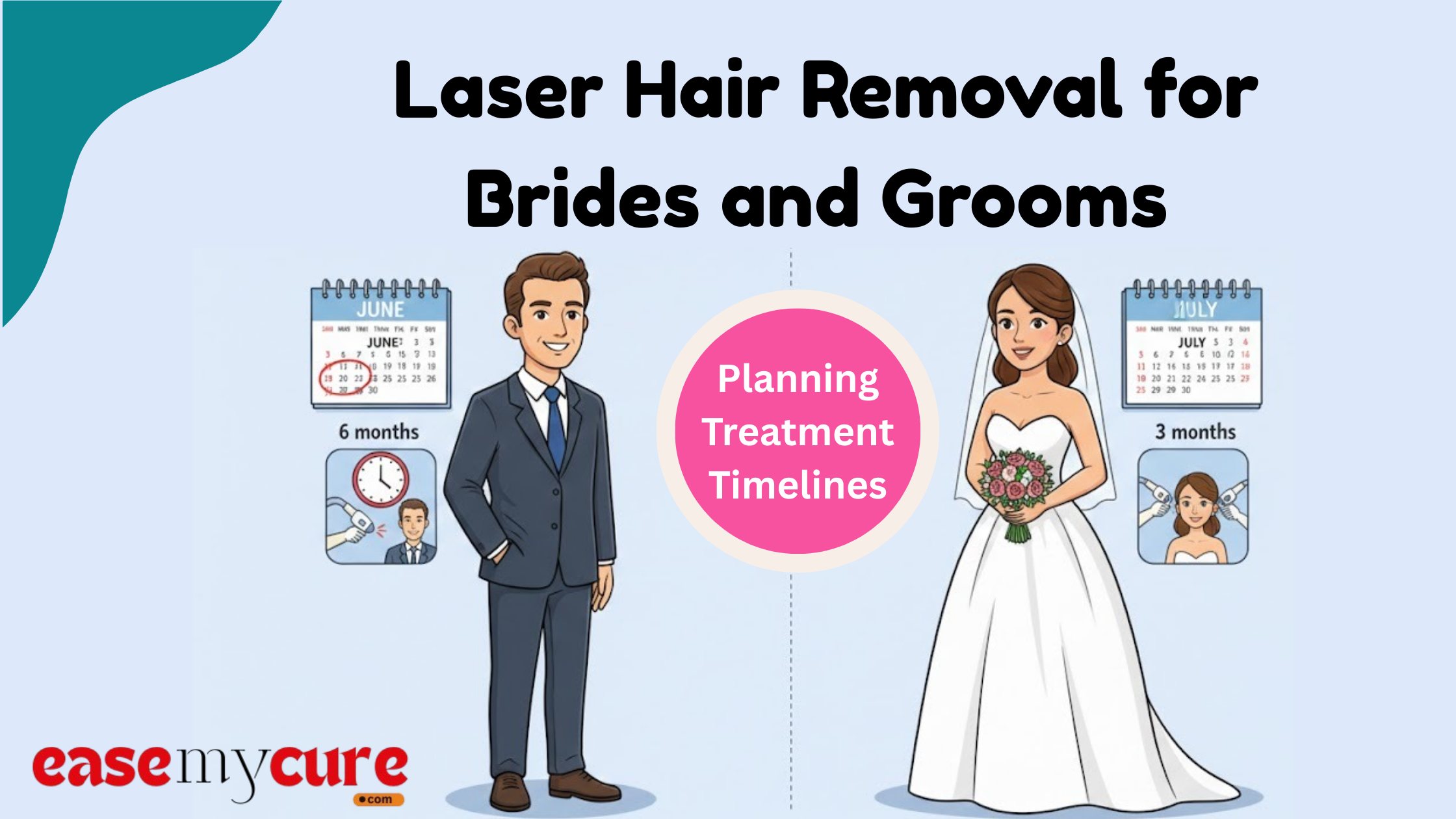
Because hair grows in staggered cycles, you need multiple sessions spaced 4–10 weeks apart to target every follicle. Starting 12 months in advance is the "Gold Standard" for three reasons:
- It allows for the recommended 6–8 sessions.
- It provides a safety buffer for skin recovery.
- It ensures you are "maintenance-free" by the time the wedding madness begins.
12-Month Laser Hair Removal Timeline: Step-by-Step Process
Planning laser hair removal before wedding is like planting a garden. You cannot rush it. You need to give it time so everything grows and settles naturally. The same goes for your skin. Starting early makes all the difference.
Here is a simple step-by-step guide from the first session to just before your wedding:
12 to 9 Months Before the Wedding: Getting Started
This is when you lay the foundation. The first two or three sessions begin to reduce hair slowly.
Hair starts growing back softer and less noticeable. This is a big relief because you will not have to deal with constant shaving or waxing anymore.
It also gives your skin time to adjust. Every person reacts differently, so this early stage helps you and your doctor figure out the best settings.
9 to 6 Months Before the Wedding: Finding Your Rhythm
Now the process becomes consistent. You usually go for sessions every six weeks. Hair that grows back is thinner and finer. Problems like ingrown hairs or irritation from shaving start to disappear.
For brides, this stage is important for the face. Fine hair that makes makeup uneven starts to go away.
Groom laser hair removal helps with beard lines and neck hair. You will not need to shave as often, which saves time and avoids irritation.
This is also when you start noticing real changes. Your skin feels different. It looks healthier and smoother. This is encouraging and makes it easier to keep up with the sessions.
6 to 3 Months Before the Wedding: Focusing on Stubborn Areas
Some areas hold on longer than others. The face, neck, underarms, chest, and back might still need extra attention.
After bridal laser hair removal, facial skin becomes even smoother. Makeup sits naturally and photographs better.
For grooms, chest and back hair reduces. This makes long ceremonies more comfortable. You will not feel hot or itchy under heavy clothing or during dancing and other rituals.
At this stage, you are polishing your results. Your skin is starting to feel soft and even.
3 to 1 Months Before the Wedding: Locking It In
This is the stage where things settle. Hair growth is much slower and finer. You can already see about 80% of the hair gone.
Your skin has time to recover fully between sessions. You do not have to worry about sudden regrowth. Grooming becomes simple and less stressful.
You know your skin is ready. You can focus on other wedding preparations without worrying about last-minute appointments or irritation.
4 to 6 Weeks Before the Wedding: The Final Touch
The last session happens in this window. It makes sure your skin is calm and ready for the wedding events. Shaving is rarely needed at this point.
This is perfect if you are going on your honeymoon to Bali or somewhere at the beach soon after the wedding. Your skin will not have irritation or razor burn from salt water or humidity. You can enjoy your trip without worrying about grooming.
Pre-wedding outdoor shoots are common during this time. If you have an outdoor shoot, schedule your bridal laser hair removal session at least 2 weeks before or 2 weeks after to ensure your skin is not in a sensitive, "sun-kissed" state.
How to Plan Laser Hair Removal Around Haldi and Mehendi
Planning laser hair removal before wedding requires navigating the traditional calendar.
Haldi (turmeric) is a natural exfoliant and heat-inducing agent. Laser also generates heat in the skin.
Applying Haldi too soon after a bridal laser hair removal session can cause stinging and extreme redness. A minimum 48–72 hour buffer between your laser session and the Haldi ceremony is recommended.
Henna acts as an external pigment on the skin. Since lasers target pigment (melanin), they can "mistake" the henna for hair roots, leading to superficial burns or blistering.
Never laser an area with active henna stains. You must wait until the mehendi has completely faded (no yellow stain remaining) before your next session.
Which Laser Technology Is Safest for Indian Skin?
Choosing the wrong machine is a common mistake that leads to burns and poor results.
- Nd:YAG (1064 nm) is widely regarded as the safest option for darker skin tones, as its longer wavelength bypasses surface melanin and targets the follicle more precisely.
- Diode lasers, which use an 810 nm wavelength, work well for wheatish to medium skin tones. Newer machines deliver energy gradually, making the treatment much more comfortable.
- IPL, or Intense Pulsed Light, is often advertised as a laser, but it is not a true laser. It is usually not safe for darker skin tones and can cause burns or uneven results.
Final Takeaway
Start your laser hair removal before wedding early. 12 months is ideal, but even 6 months can provide a 60–70% reduction. Use platforms like EaseMyCure to find verified clinics in your city that use FDA-approved Nd:YAG or Diode technology.
Don't wait for the wedding invites to go out. Visit us today and connect with India's top-rated dermatologists. Get transparent pricing, flexible EMI options, and the confidence to shine in every wedding ritual.
Learn More About:- Fractional CO₂ Laser vs. Traditional CO₂ Laser