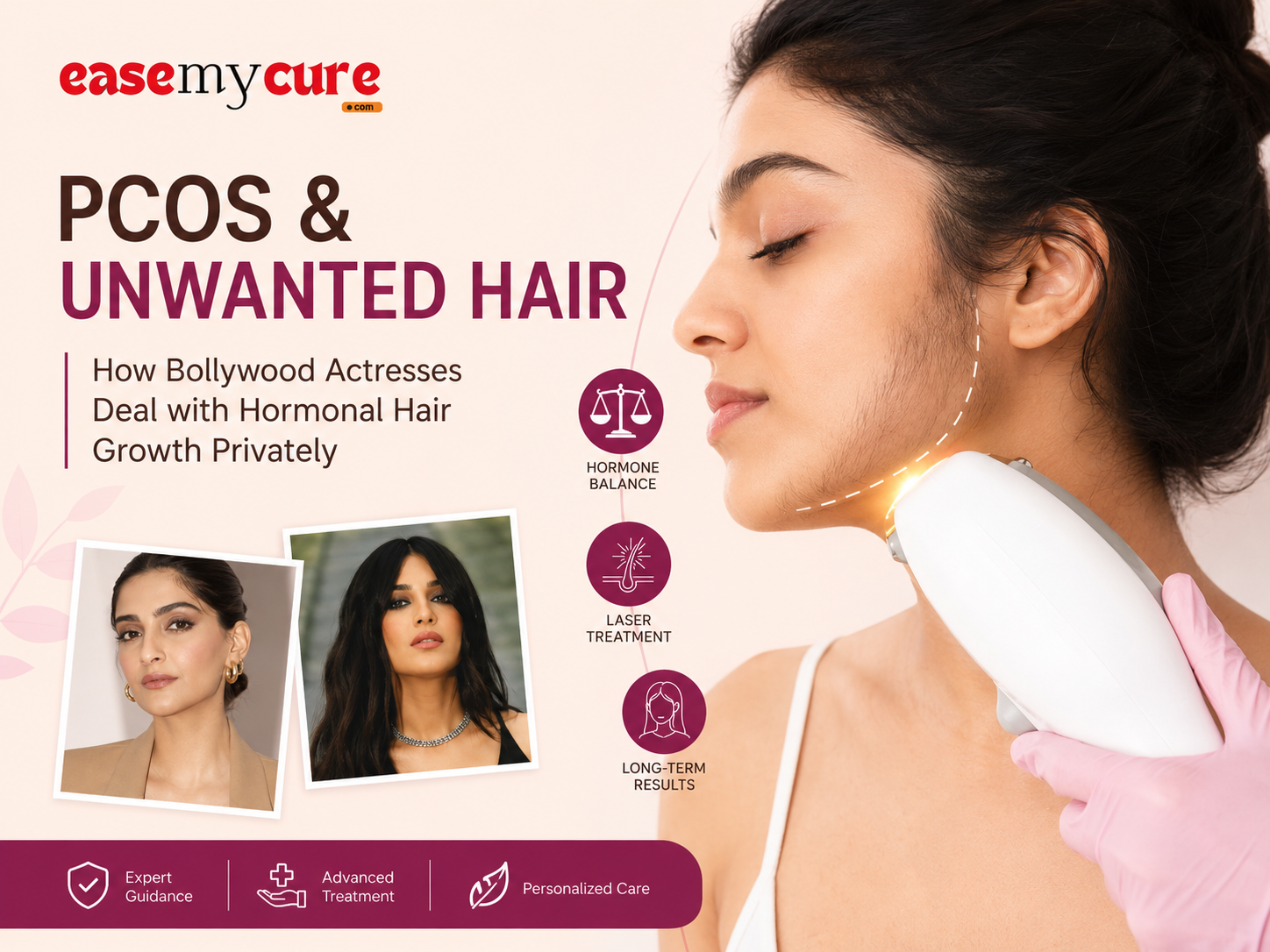
You do all the things, you eat all the right foods, you take supplements and the hair on your chin or jawline is relentless. Some women with polycystic ovary syndrome (PCOS) experience laser hair removal PCOS issues because they feel trapped in a never-ending hair removal cycle of threading, waxing and shaving. It can be as challenging as the symptoms. If you can't keep facial hair at bay, it's not just in your skin, it's in your hormones. The good news: there's a treatment plan for this.
Why PCOS Causes Excess Hair the Hormonal Explanation
Polycystic Ovary Syndrome (PCOS) is a very common hormone disorder in women of child bearing age. Research suggests PCOS impacts 1 in 5 women in some urban areas in India. A key symptom is elevated levels of androgen hormones, also known as "male hormones" - but women produce them naturally.
Elevated androgens can activate the hair follicles on the chin, jaw, upper lip, chest, abdomen and neck. This darkening of the hair is called hirsutism.
The hair caused by PCOS can become coarse and thick. That's why basic methods like waxing and threading only offer temporary hair removal. They do not prevent hormones from stimulating follicles to regrow.
Dermatologists will often say that it is expected to continually grow hair when follicles are being constantly stimulated by hormones unless you treat the symptom and the imbalance together.
Does Laser Hair Removal Actually Work for PCOS Hirsutism?
Yes laser hair removal PCOS treatment can be very effective provided there are reasonable expectations.
The laser uses light energy to destroy pigment in the hair follicle. This destroys the follicle, and results in reduced or halted hair regrowth. For women with PCOS, this results in a marked decrease in the number of hairs, slower regrowth and finer hairs.
But PCOS is not like non-hormonal hair growth. Activation of dormant follicles by androgens can result in new hair growth. This means laser is an excellent way to reduce existing unwanted hair, but may not be enough of a one-off treatment if hormones are not well-managed.
Experience has shown the ideal results occur when laser treatments are used alongside medical treatment for PCOS, including:
- Weight management where needed
- Insulin resistance treatment
- Prescribed hormone drugs
- Lifestyle improvements
- Stress and sleep regulation
Patients report a huge boost in self-esteem when shaving or threading becomes less frequent.
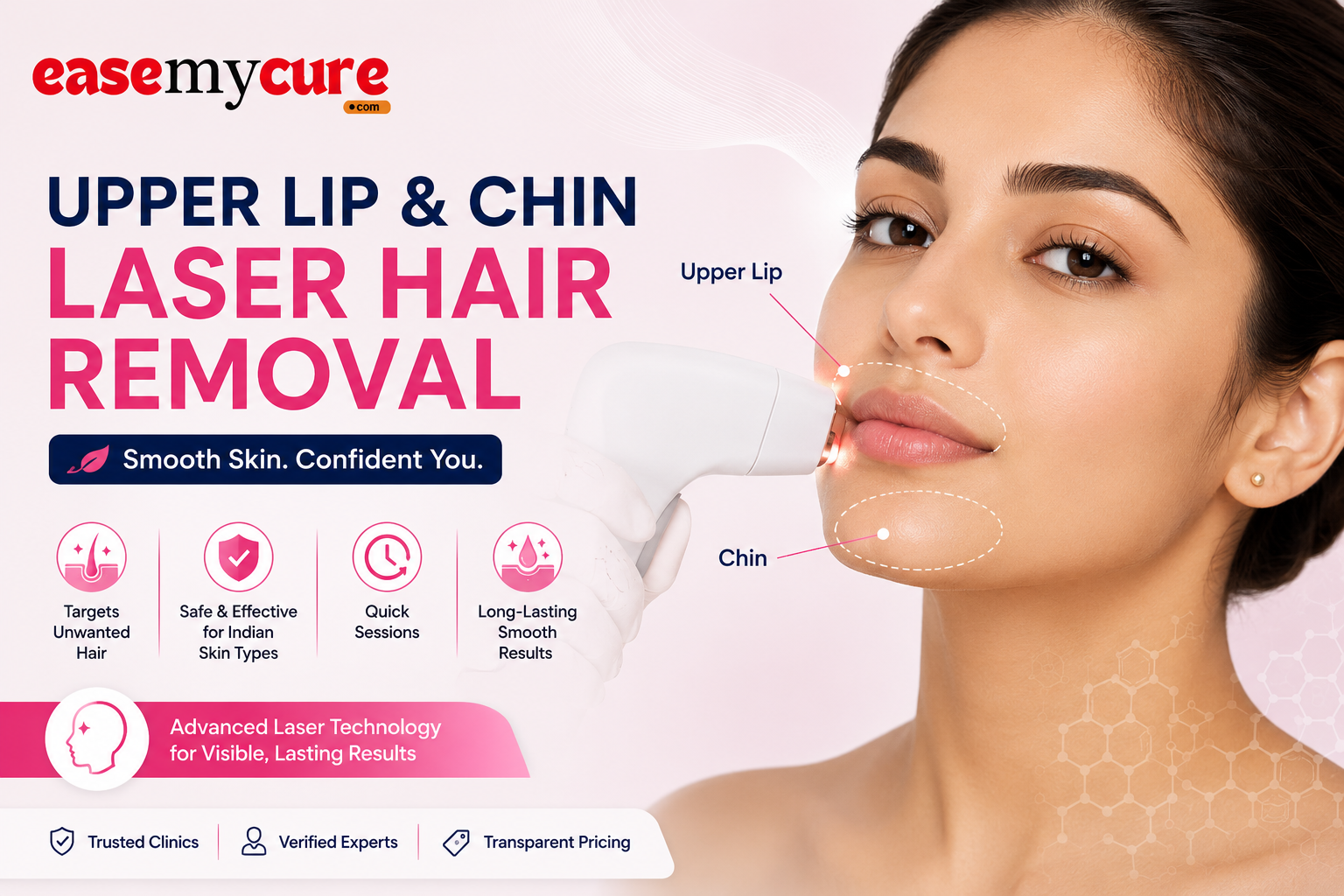
Read more about it at Hormonal Hair Loss in Women and Laser Hair Removal for Upper Lip & Chin, EaseMyCure.
How Many Sessions Does PCOS Hair Removal Require vs Non-Hormonal?
For no hormonal women, 6-8 laser treatments may provide good hair reduction. For women with PCOS, more sessions may be required due to higher hormone levels (often 8-12 sessions, depending on hormone levels, hair density and where it's located).
Facial hairs in particular can be resistant because:
- Follicles are still stimulated by hormones
- The facial hair cycle is complex
- New follicles may activate later
Facial treatments are usually 4-6 weeks apart.
Touch-ups are common in PCOS, too. Rather than the usual package and then done, women who are treated for PCOS need occasional maintenance one to two times a year.
This doesn't mean treatment is not working. It's a natural part of the chronic hormonal condition called PCOS. As hormone levels improve, maintenance sessions decrease.
The Right Order of Treatment Hormonal Control First or Laser First?
It's best to do both simultaneously.
If there are severe symptoms of PCOS, it's best to consult a gynecologist or endocrinologist first. They will look for insulin resistance, irregular menstruation, acne, weight gain or high androgens.
Hormonal regulation can enhance laser hair removal results since fewer follicles are stimulated to regrow.
Many women, however, start laser therapy with the onset of medical treatment. This is reasonable because obvious facial hair can cause low self-esteem and a feeling of insecurities.
A balanced approach may look like this:
- Confirm PCOS diagnosis
- Start medication treatment as advised
- Start laser treatments with an experienced dermatologist clinic
- Review after a few sessions
It's not always "when it's all right". But it is always best to "kill two birds with one stone".
Which Laser Technology Is Best for PCOS Facial Hair on Indian Skin?
Choice of device is important for Indian skin types.
Dermatologists generally favour the use of Nd:YAG laser for medium to darker Indian skin types (Fitzpatrick IV to V skin). It has increased depth of penetration, and when used properly, less risk of pigmentation.
Diode laser can also be used, particularly for lighter skin of Indians and thick dark hair.
Important reminders:
- Ask for a patch test
- Only work in medically managed clinics
- Don't use high settings on face
- Follow sun protection strictly
IPL (Intense Pulsed Light) is different from medical laser and may not be as effective when it comes to PCOS facial hair.
After Laser What Maintenance Looks Like for PCOS Patients
Maintenance is the norm.
For the majority of PCOS patients, touch-up maintenance is needed every 6-12 months (some need it sooner). If hormone levels improve, the frequency may increase.
Long-term success depends on:
- Managing insulin resistance
- Keeping weight stable, if required
- Using medication as instructed
- Following scheduled laser reviews
So think of laser as a "big gun" for hair reduction as part of an overall strategy to manage PCOS.