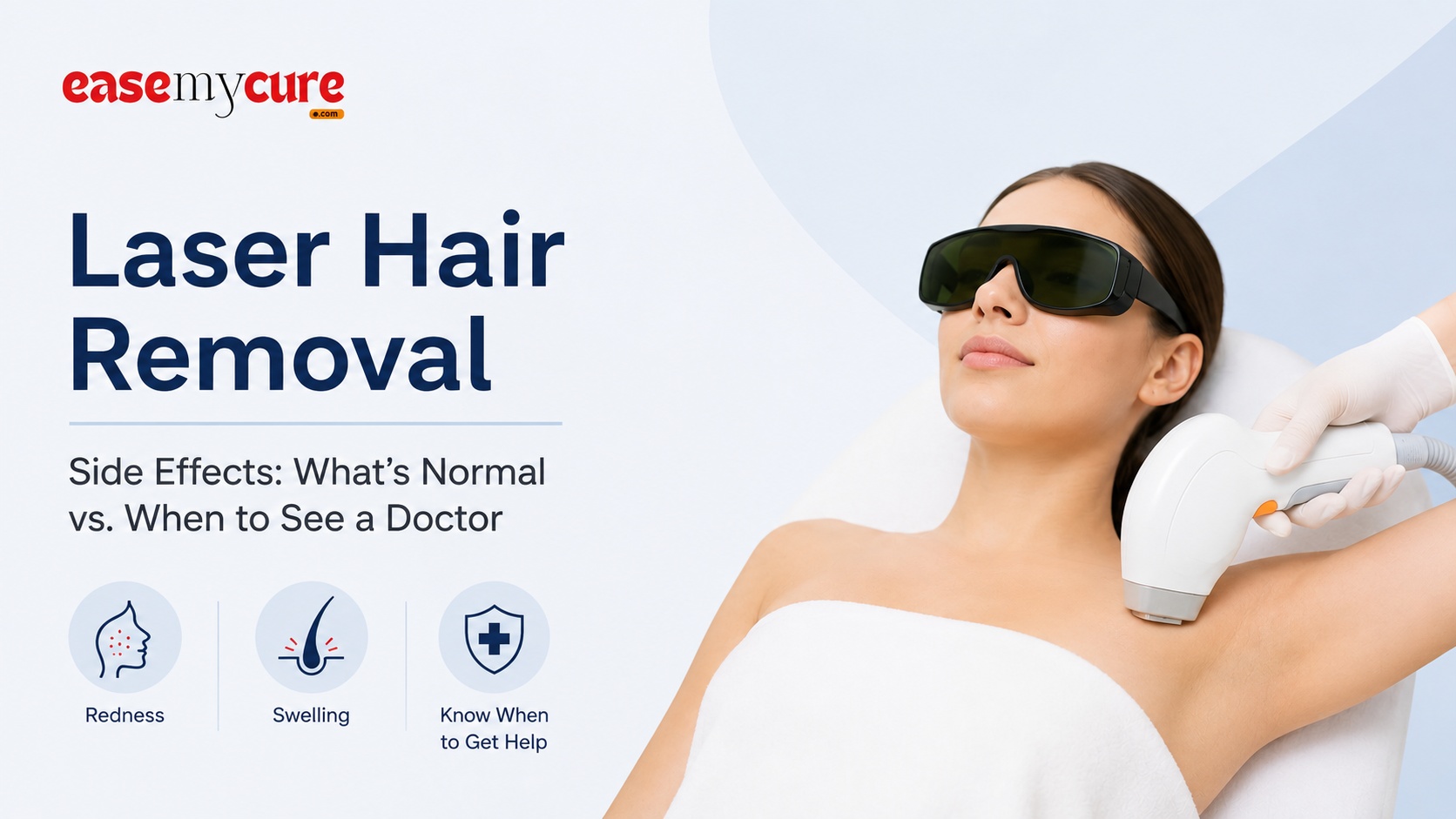

All the people who are taking laser sessions for the first time often worry about the laser hair removal side effects in India. However, there are very satisfying answers to all such concerns. The side effects of most laser hair removals are mild and temporary.
Well, we can say that they are normal responses of our skin to any treatment. In order to ensure that your skin is protected against anything that could cause problems, you must know the difference between normal responses and warning signs. Once you are able to do so, you will be able to take quick action.
In this article, you will learn the things you need to worry about and those that are insignificant.
Common Side Effects That Are Completely Normal
Every time you undergo a laser hair removal procedure, your skin responds in various ways. Well, all the types of responses are perfectly fine. Therefore, there should be no reason for you to feel alarmed.
Within 24 to 48 hours, some patients report that their skin turns red and warm, and a small amount of swelling occurs around the hair follicles treated. It means that your hair follicles have been affected by the laser beam, and your body's immune system is reacting to it. Your skin redness and mild swelling will fade away within minutes or 24 hours.
Apart from this, slight swelling in the area with coarse hairs, such as armpits and bikini line, also happens at times. But it will also settle within 24 hours.
Besides these, one reaction that often surprises first-time patients is hair falling after 1-3 weeks. Most people think it is hair regrowth, but actually it is falling off of previously treated hair. Dermatologists consider it a positive sign.
If you are noticing these signs, you can follow these tips:
- Use gentle and fragrance-free skincare.
- Use SPF 50 sunscreen daily to avoid UV exposure.
- Avoid scratching or exfoliating the area too soon.
Less Common But Still Normal Reactions
There are a few changes that do not occur frequently after laser removal but are still considered normal. These changes depend on skin type and sensitivity. One of these changes is temporary changes in skin pigmentation. In Indian skin, hyperpigmentation is commonly seen after laser sessions. It is due to higher melanin pigmentation in Indians. However, hypopigmentation, which is skin lightening, also occurs rarely. Both of these conditions resolve within a few days or weeks. But a person should also apply proper SPF and avoid sun exposure.
Another possible reaction after laser treatment is folliculitis. These are tiny, pimple-like pustules around the hair follicle. Bumps appear because of irritation or mild inflammation of the hair follicle caused by the laser. However, the bumps subside after a few days and can be managed using topical creams.
Another less common side effect of laser treatment is minor bruising. It occurs in sensitive areas or if the skin was compressed before treatment. However, bruising also occurs in some people who are taking blood thinners. Bruising fades within a week.
Side Effects That Are NOT Normal - See Your Clinic Immediately
There are many skin reactions to lasers, which are normal. But, besides them, there are a few side effects that are not common and require immediate attention from dermatologists.
- Blistering or burns: Blisters or burning sensations on the skin are not normal reactions. Laser burn blisters can be an indication of overheating or wrong settings of the laser due to the skin type. Any person who experiences them should see a dermatologist immediately.
- Crusting over Large Areas: Sometimes, very fine surface crusting on a single follicle is normal. But if widespread crusting or thick scabbing occurs, then it is a warning sign of skin damage.
- Severe pain lasting more than 24 hours: After the treatment, mild discomfort or pain is also expected. But if it gets severe and lasts 24 hours, then you should get medical treatment immediately.
- Signs of infection: You should also notice if there is pus on the treated area. Or, if the warmth, red streaks, and fever, then you should also consult your doctor.
Laser hair removal side effects like this are rare to occur, especially if you are doing it from a reputable clinic. But if in any case you notice any of these signs, you must visit a doctor and avoid treating them at home.
Risk Factors That Increase Side Effects in Indian Skin
Some factors increase the chances of side effects after laser treatment in Indian skin types. This is because Indian skin type, which falls in Fitzpatrick IV–VI, is more sensitive to some laser reactions due to higher levels of melanin pigments. Let’s explore some of these risk factors.
Skin that has more sun exposure or tan has more chances of burns or pigmentation changes. This happens because the tan skin absorbs more laser energy.
Using the wrong laser type is another major risk factor. Older laser devices are not suitable for all skin tones. So, they increase the risk of pigmentation. But some advanced diode lasers and Nd:YAG are considered safe for Indian skin. To learn more about how lasers affect darker skin tone, you must read our guide on Laser Hair Removal for Darker Skin Tones.
If you are using retinoids or other exfoliating agents, you should stop a few days before the treatment. As they thin the skin surface layers, it increases the chances of thermal damage.
Besides the topical use, there are certain medications like antibiotics, acne medications, and herbal supplements that increase skin sensitivity.
How to Minimize Side Effects - Prevention Guide
If you are taking laser treatment for the first time, you shouldn’t be worried about laser hair removal complications. You can avoid them completely by following essential prevention steps.
Pre-Session Skin Preparation:
- You should shave the area 24 hours before the session. Also, avoid waxing, threading, or bleaching at least 4 weeks before the sessions.
- Stop using retinoids or exfoliating agents at least a week before.
- Reduce your sun exposure as much as possible.
Post-Session Skin Cooling:
- After the laser session, apply cooling agents, aloe vera gel, or a cold compress to reduce redness and warmth.
- Avoid sauna, hot bath, and even exercise for 24 to 48 hours
- Avoid direct sun exposure after the treatment session
Regular Use of SPF:
You should never skip your sunscreen before and after the treatment. Your skin becomes sensitive after laser treatment. UV rays will have more effect and can cause hyperpigmentation.
Choose the Best Clinic:
For better results and treatment, it is also important to choose the right clinic. So the clinic you choose ensures you have appropriate devices and trained technicians. Before the treatment, they should also perform the proper patch test.
To prepare a complete checklist, see our detailed article on Pre & Post Care for Laser Hair Removal.
Long-Term Safety of Laser Hair Removal - What Research Tells Us
For many years, people have been getting laser hair removal sessions for smooth skin. These aesthetic procedures are considered safe for all adults.
Moreover, there is no scientific evidence of skin cancer or other systemic harm due to laser sessions. Lasers only affect the melanin pigment in hair follicles, and it does not change the person's DNA.
In fact, most of the patients say they have experienced smooth skin texture and reduced ingrown hair over time. According to dermatologists, laser hair removal is among the safest cosmetic surgeries performed by trained practitioners using the proper technology.