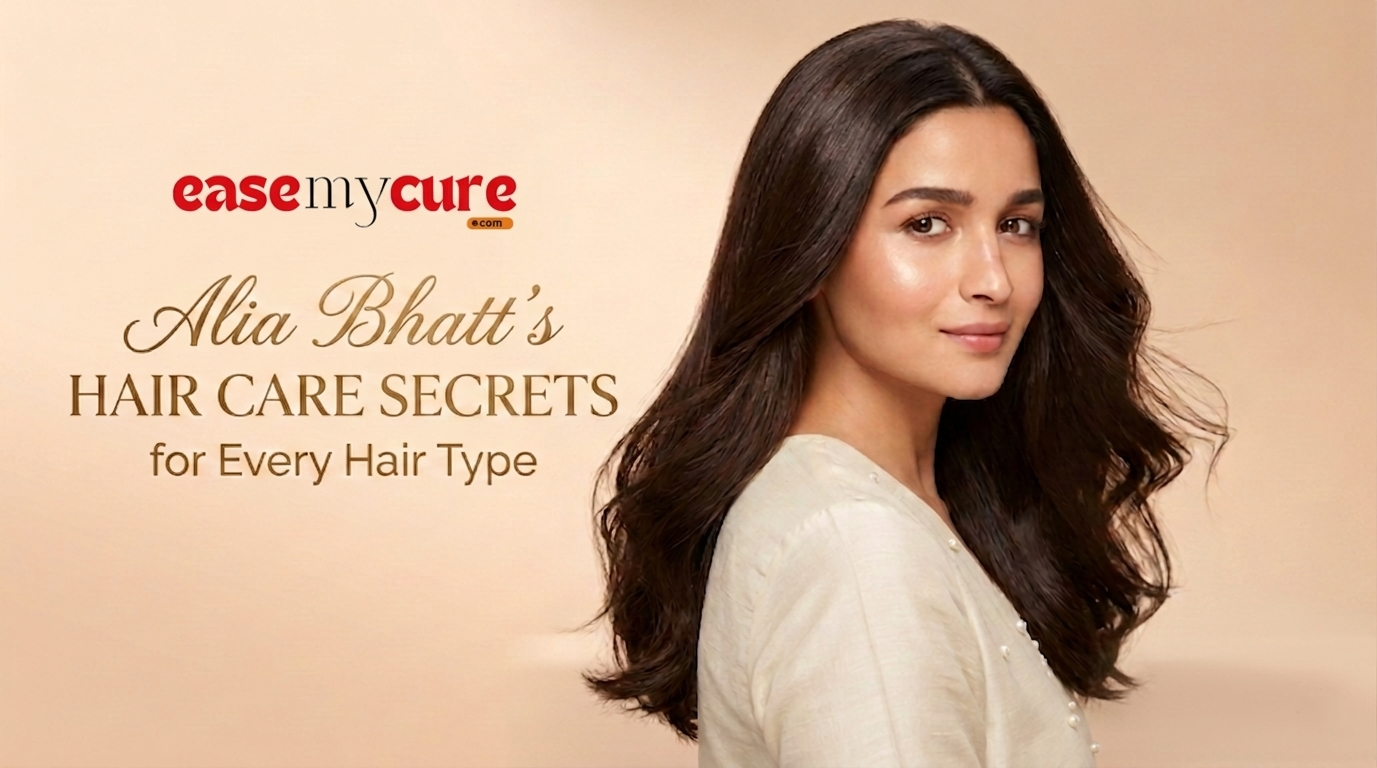

When talking about voluminous and lustrous hair in Bollywood, Alia Bhatt automatically comes to mind. Alia Bhatt’s hair care routine has become one of the most discussed topics due to her thick and shining hair. Her hair looks healthy and gives her a perfect look in every role. However, every Indian woman wishes to find out if her healthy hair is due to genetics or a process that anyone can adopt.
Well, the answer lies somewhere in between. Besides her good genes, her simple, consistent hair habits also play a major role. The best thing is that most of these care tips come from Indian hair care traditions that have existed for centuries.
Alia Bhatt's Publicly Reported Hair Care Habits - What We Know
Alia Bhatt has discussed her hair care tips in several interviews before. However, there has been no concrete hair care advice from her side yet. There are still many hair practices that can be observed from her interviews and styling.
One commonly discussed method of hair care is traditional oil massage. It is also known as champi in the local language. To deeply nourish the scalp and improve blood circulation, she applies oil before taking a shower.
One other hair practice that Alia Bhatt follows is not using heat treatments too much. She does not rely on straightening and curling iron treatments. However, she prefers to use natural texture when possible. It is for this reason that they always work on her hair in its near-natural form.
In some interviews, people also watch Alia Bhatt saying to limit the use of harsh chemicals on hair. She also avoids using harsh dyes, rebonding treatments, or styling products. This is because they weaken your hair over time.
All these methods clearly show that for hair care, she focuses on the “less is more” philosophy. She focuses on consistency rather than complexity.
The Science Behind Oil Massages - Why Bollywood Stars Swear By Champi
The champi is an Indian scalp massage method with warm oil. Besides, being culturally important, there are many scientific impacts of the champi massage on the human scalp. When you massage the scalp with natural oils, it will increase the flow of blood into the hair follicles. As a result of increased blood flow, the follicles get enough oxygen and nutrition.
This increased blood flow will lead to an increase in the hair’s natural growing process. Research findings also suggest that massage makes hair follicles thicker because of the stretching of the papilla cells.
Additionally, massaging with oils also helps in distributing sebum equally from the scalp to the hair strands. This enhances their appearance by giving them a natural sheen while reducing dryness caused by polluted Indian environments.
Another aspect of champi that we often overlook is that it reduces stress. When you gently massage your scalp with oil, it activates the relaxation response in the body. So, it helps to reduce cortisol production. Thus, by massaging your scalp, you’ll be able to decrease your stress level and, consequently, stop losing hair due to stress.
Various types of oil have also proven beneficial in scalp massage. Coconut oil is one of the most used oils in India. Your scalp absorbs coconut oil easily, so it helps to reduce protein loss from washing. For more details, you can see our guide on the best natural oils for hair growth.
Low-Heat Styling - Why Indian Hair Responds Better Without Excessive Heat
Compared to the European hair types, the hair structure of Indians is denser and contains more melanin. This increases the strength of their hair. But it also makes their hair more susceptible to damage through heat because it leads to the gradual degradation of proteins.
Your hair is mainly made of keratin proteins that are linked together by disulfide bonds. If you expose your hair to temperatures higher than 150°C repeatedly, the bonds in your hair start to break apart. Consequently, this heat damage makes your hair porous, frizzy, and brittle.
Moreover, the hair breakage worsens with every additional heat styling session. Indian Women who have thick and coarse hair damage take longer to appear. But once damage happens, it will be slow to recover.
To maintain your health, you can choose to air-dry your hair, braid it for waves, and reduce heat styling. That is the reason behind linking Alia Bhatt’s hair growth with her low-heat method.
Can Her Routine Work for Every Hair Type? Our Honest Analysis
While most Indian women want to follow Alia Bhat's hair care routine. But the main question that arises is whether her routine is suitable for all hair types. Well, here is our honest answer. Alia Bhatt's routine is effective. But, unfortunately, it does not work for all hair types. Her routine is ideal for people who have:
- Strong, thick hair
- Oily or normal scalp type
- Untreated hair
You need to make some essential adjustments to Alia’s hair routine if your hair is thinner, chemically-treated, and has high porosity. You can follow these steps:
- If your hair is fine or thin, applying heavy oils directly on the scalp will result in a build-up and make the hair volume flat. It’s recommended that you apply light oils like jojoba oil and argan oil, and clean them well.
- Hair with chemical treatments has changed porosity and responds to things differently. So, deep conditioning is more important in this situation instead of oiling.
- Hair that is heat-damaged or has high-porosity hair loses its moisture quickly. That’s why you should apply oil after washing to keep them hydrated.
It proves that the basis of Alia’s hair regimen is sound. But modification according to your hair type is necessary. The things that suit Alia’s hair will not necessarily suit every kind of Indian hair.
Building an Alia-Inspired Routine That Suits Indian Hair
Based on Alia’s published habits and known hair science, here is a five-step weekly hair care plan for everyone.
Step - 1: Pre-wash Oil Massage (1–2 times a week)
Use coconut, sesame, jojoba, or other natural oils and mildly warm 2-3 tablespoons. Massage oil into your scalp using circular motion for 10-15 minutes. Leave for 30 minutes for deeper oil penetration.
Step - 2: Gentle, sulphate-free shampoo
Use sulphate-free shampoo to wash. Only use it on the roots, and allow the rinse water to wash the strands. This will prevent excessive drying of your hair.
Step - 3: Conditioning every wash
You should also apply conditioner after every wash from mid-lengths to tips. Leave the conditioner for 2–3 minutes, and rinse with cool water to seal the cuticle.
Step - 4: Minimize Heat Styling
Next, you should gently blot your hair with a microfibre towel and allow it to air-dry wherever possible. If you want to blow-dry, then you must use a heat protector.
Step - 5: Protective styling between washes
Between washes, you should also prefer protective styling options, for example. Loose braids, low buns, and satin pillowcases reduce friction between hair that causes breakage.
For additional information regarding the traditional method of hair care, you should refer to our article discussing Ayurvedic hair care techniques.