
It is the terrifying moment every patient dreads that is three weeks after your surgery when you look in the mirror and realize your hair is actually thinner than before. Shock loss after hair transplant is a scary thing to see but it does not mean your surgery failed. For most people this is just a normal part of the body healing itself on the way to better results. When you know why this happens you can handle this phase without stress. Instead of getting panic what you need to do is that can wait calmly give your hairs time so that they grow back thicker and stronger than ever.
What Is Shock Loss and Why Does It Happen?
Shock loss or in doctors language postoperative effluvium is a condition in which the scalp experiences a severe surgical trauma. When performing a transplant, the scalp is localized under anesthesia, and small incisions and physical implantation of grafts are done. This shock may trigger the other follicles in the area (the transplanted hair and the existing hair) to enter the hair growth cycle in the telogen (resting) phase too soon.
But many ask is shock loss prevalent? Answering it then according to dermatologists almost all patients experience a certain level of shedding. They say that this is a temporary telogen shift in which the follicle temporarily closes to safeguard itself and redirect energy to repair the tissue. Although it seems that you are losing your investment, the follicle is still alive underneath the surface. This shedding is usually experienced on both the donor area and recipient site equally with the hair appearing sparse in a few months before the actual outcomes start to show.
Shock Loss Timeline Week by Week
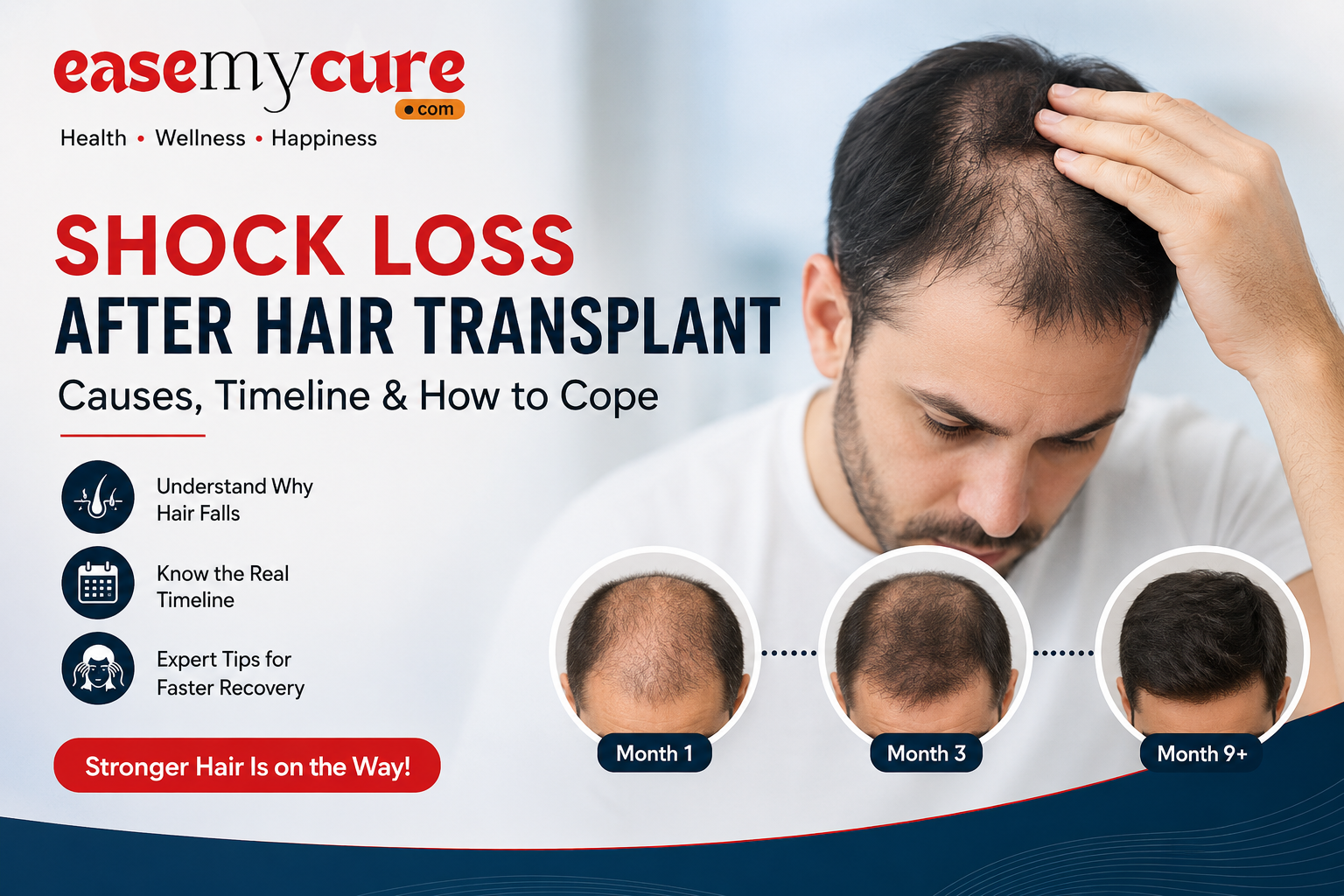
Navigating the hair transplant shock loss timeline requires a calendar and a lot of patience. Your scalp goes through distinct phases of trauma and eventual rejuvenation.
- Week 1–2: In the first week typical healing process begins. There will be scabbing and possible swelling. The new grafts have taken root and your original hair normally appears alright.
- Week 3–6: It is the time when the shock loss after hair transplant starts in earnest. The hairs in the grafts transplanted tend to fall off first then the native hair around the area.
- Months 2–3: This is the lowest point which is commonly known as the ugly duckling stage. The head can appear patchy and the elation of the early surgery usually drops into panic.
- Months 4–6: Regrowth begins. You will see hair, like a baby, growing up. This is an indication that the follicles have just left the resting position.
- Months 9–12: There is a great increase and thickening. In hair shedding transplant India clinics, a patient is normally invited into the clinic after a year to view the initial results.
- Month 12–18: The end outcome is obtained. The hair is now fully grown and thick reaching its aesthetic potential.
The Timeline of Transplanted Graft Growth
After a month the grafted follicles usually tend to lose their hair shafts. This is expected. Within three months, a new shaft is formed by the follicle. At the beginning, these hairs can be either thin or curly, but they are normalized in texture by the end of the 8th month.
The Timeline of Shock Loss and Recovery in Existing Hair
The surrounding inflammation can also shock the native hair (the hair that you had before the surgery). Although the schedule is similar to the transplanted grafts, the restoration of the native hair is also quicker, because these follicles are already formed. The majority of the native hair grows back to its full density within the sixth month.
Is Shock Loss in Existing Hair Permanent?
The fear of why hair falls after a transplant often create a tension that it may come back. But there is no need not worry about it. Shock loss in the existing hair is not permanent in the vast majority of patients. The follicles are in a mere suspended animation. Native hair usually heals completely after the inflammation of the scalp and the maximization of blood circulation.
Nevertheless, there is a rider to it; in case the hair already present was at the terminal stage of miniaturization (advanced male pattern baldness), the shock may hasten its flight. This is what makes dermatologists stress the significance of medical management. You must have something to worry about, however, unless you notice no evidence of stubble or of regrowth by the seventh month, which could be a sign of permanent transection in the course of surgery--uncommon with skillful surgeons.
What You Can Do During Shock Loss to Support Recovery
While you cannot stop biology you can provide the best environment for coping with hair transplant shock loss.
- Minoxidil Use- Minoxidil (5%) can be used by many surgeons some weeks post surgery to stimulate blood flow and reduce the telogen stage.
- Nutrition Protocol- Pay attention to Biotin, Iron, and Zinc. Protein rich diet is a must because hair is mainly composed of keratin.
- Scalp Massage Timing- Your surgeon has to clear you (typically by day 14), but then, very gentle scalp massages can enhance circulation.
- Follow-up- Do not miss your follow ups after the operations. Reassurance can be given by your surgeon and any signs of folliculitis are checked which may slow growth. For more details on the tools you need check out our Hair Transplant Aftercare Kit.
Emotional Side of Shock Loss This Is Normal, and You Are Not Alone
The psychological impact of seeing your hair fall out after paying for a transplant cannot be understated. It is a period of high vulnerability. Dermatologists often spend more time acting as counselors during month two than as clinicians.
One must follow open communication with your surgical team because it is crucial. Becoming part of a patient community is helpful as well because you will find hundreds of others who had the same patchy stage but ended up with incredible results in the future. You see, it is the shed that is the antecedent of the growth; it is the scalp clearing the deck of new, more robust hair.