
Are you getting a hair transplant? If yes, one question might have come to your mind: What is the hair transplant graft survival rate going to be?
The graft survival rate is what actually decides how much hair you’ll see growing a few months later, meaning how full and natural your final results will be.
Even if there is a small drop in survival, it can make a visible difference in your hair density. That’s why knowing the real hair transplant success factors, and why grafts fail is important.
So, if you’re a patient expecting strong, long-lasting hair transplant results India, then this guide is for you. This article will help you learn exactly what affects graft survival and how you can improve the final outcome.
What Is Graft Survival Rate and Why It Determines Your Result
The hair transplant graft survival rate simply means how many transplanted follicles stay alive and produce hair after the hair transplant surgery. The graft survival rate does not measure styling, thickness, or hairline design. It’s only survival.
Most clinics deliver around 85% to 95% survival in India. The difference may seem small to you, but it can noticeably affect the final result.
To understand easily, see the example:
Let’s say you get 1,200 grafts. At 90% survival, about 1,080 grow. At 75%, only 900 survive. That difference of 180 grafts can make your hair look thinner, especially in the front area.
Dermatologists often explain that patients focus too much on the number of grafts implanted, but not enough on how many actually survive, which is wrong.
Now, let’s understand the hair transplant graft survival factors that determine success rate.
Factor 1 - Surgeon Skill in Extraction and Implantation
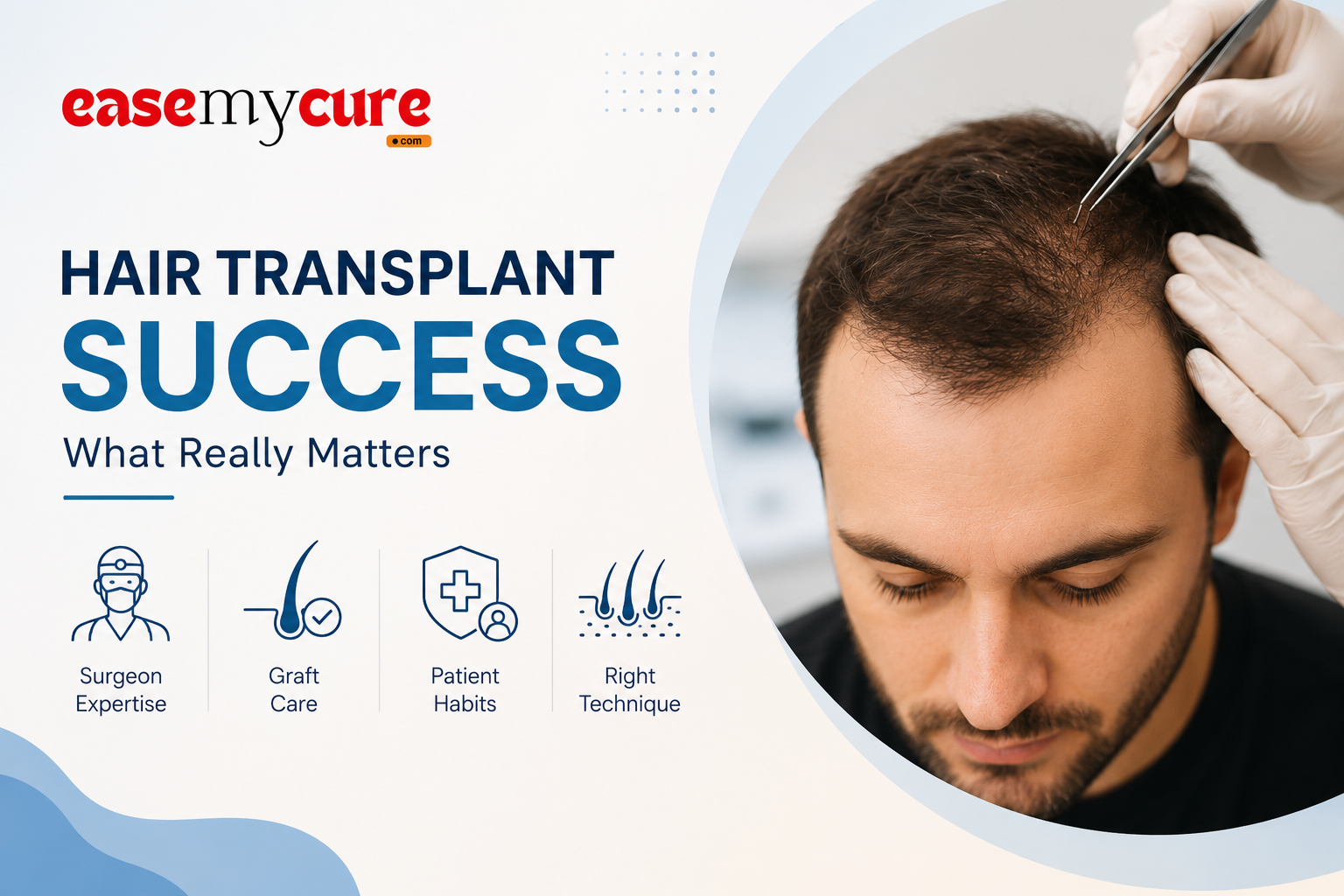
First of all, a surgeon's expertise is one of the most critical hair transplant success factors. The reason is quite simple: every stage of the procedure requires precision and timing. There isn’t any room for mistakes, because one error can affect the final result.
Surgeons skill include:
# Extraction: During extraction, the surgeon must avoid damaging follicles. This is measured by the transection rate, the percentage of grafts cut or injured during removal. Skilled surgeons maintain this below 5%, while inexperienced hands can damage a significant portion of grafts.
# Time Management: Time management is equally important, as once the grafts are extracted, they begin to lose viability. Surgeons having enough experience can work quickly and efficiently to reduce the time follicles spend outside the body. This improves graft survival after transplant.
# Implantation: Implantation technique also plays a key role. The angle, depth, and direction of placement must match natural hair growth. Poor implantation not only affects appearance but can also compromise blood supply to the grafts.
In simple terms, even the best technology won’t help if the surgeon’s skill is not good.
Factor 2 - Graft Storage and Handling Between Extraction and Implantation
After the grafts are removed, the way they are stored and handled becomes very important for their survival. This phase is often ignored by patients. However, it directly impacts the hair transplant graft survival rate.
Good surgeons don’t just place grafts on gauze or in plain saline. They use advanced storage solutions like HypoThermosol or buffered mediums that maintain the right pH.
This helps keep the cells stable and reduces stress.
Time also matters here. Grafts should ideally be implanted back into the scalp within a few hours. The longer they stay outside the body, the higher the chances of getting damage.
Temperature is another factor. Hair grafts are usually kept in chilled conditions (around 2° to 8°C, with 4°C being standard). This helps slow down cell activity and preserve their viability.
Above all, coordination among the technicians should be there. Clinics with skilled workers can quickly move grafts from extraction to implantation without any delay.
Factor 3 - Patient Factors That Affect Survival
Many patients ignore this, but your habits can directly affect graft survival after transplant. Even a perfect surgery needs proper support from your side too.
Below are the several factors that patient needs to take care of:
- Smoking (Biggest Risk): Since smoking reduces blood flow and oxygen supply to the scalp, newly implanted grafts may struggle to survive and attach properly.
- Diabetes and Health Conditions: If you’re a diabetes patient, it can slow down healing and affect circulation. This means grafts may not get enough nutrients during the critical early phase.
- Blood Thinners: Blood-thinning medicines can increase bleeding during the procedure. This may interfere with proper graft placement and stability.
- Post-Op Care Compliance: Touching, scratching, or not following washing instructions can dislodge grafts. So, keeping these things in mind is necessary.
- Sun Exposure and Sweating: Direct sunlight and heavy sweating can irritate the scalp. This can affect how well the grafts settle and survive in the early stage.
If a patient follows proper care routines and uses recommended products, like those mentioned in the guide on Hair Transplant Aftercare Kit, can make a huge difference in survival rates.
Factor 4 - The Right Recipient Zone Preparation
The area where grafts are implanted, known as the “recipient zone”, must be prepared properly for successful growth. This is one of the most overlooked hair transplant success factors.
To prepare recipient zone, surgeons need to consider:
- Depth: Surgeons create small openings or channels in the scalp before placing grafts. The depth and angle of these slits must be precise.
If they are too deep or too shallow, the graft may not get proper blood supply.
- Angle and Direction: Angle and direction also matter for natural-looking results. But beyond appearance, incorrect angles can affect how well the graft settles and survives.
- Density: Density planning is another key point. Placing too many grafts in a small area can reduce blood supply to each follicle. This can lower the overall graft survival after transplant.
Note: While natural hair is much denser, transplants usually aim for a balanced look with about 35-50 grafts per cm², slightly higher in the hairline (up to 55-65 FU/cm²) and lower in the crown for a more natural appearance.
Experienced surgeons also take care to avoid damaging existing hair follicles during this process. This is especially important in patients who still have some natural hair left.
How to Maximise Your Graft Survival - Patient Checklist
Hair transplant surgery is not the final step. The main work starts afterward. Here’s how you can boost the graft survival:
- Stop smoking: Avoid smoke at least 2 weeks before and after surgery, as smoking reduces blood flow to the scalp. This directly affects graft survival after transplant.
- Follow post-op instructions strictly: This includes how to sleep, wash your hair, and avoid touching the grafts. Even small mistakes can dislodge follicles in the first few days.
- Protect your scalp from sun and sweat: Avoid direct sun exposure, gym, and heavy sweating for at least 10-14 days.
- Eat well and stay hydrated: You must have a protein-rich diet, along with vitamins like biotin and zinc.
- Attend follow-ups and take medicines on time: Dermatologists often say that patients who stick to their medications and PRP sessions properly tend to see better results.
Even if your surgeon does everything right, poor aftercare can lower results. Many cases of why grafts fail are linked to carelessness rather than surgical errors, which is why knowing the common mistakes we’ve covered in “Hair Transplant Failure: Top 7 Reasons” is essential.