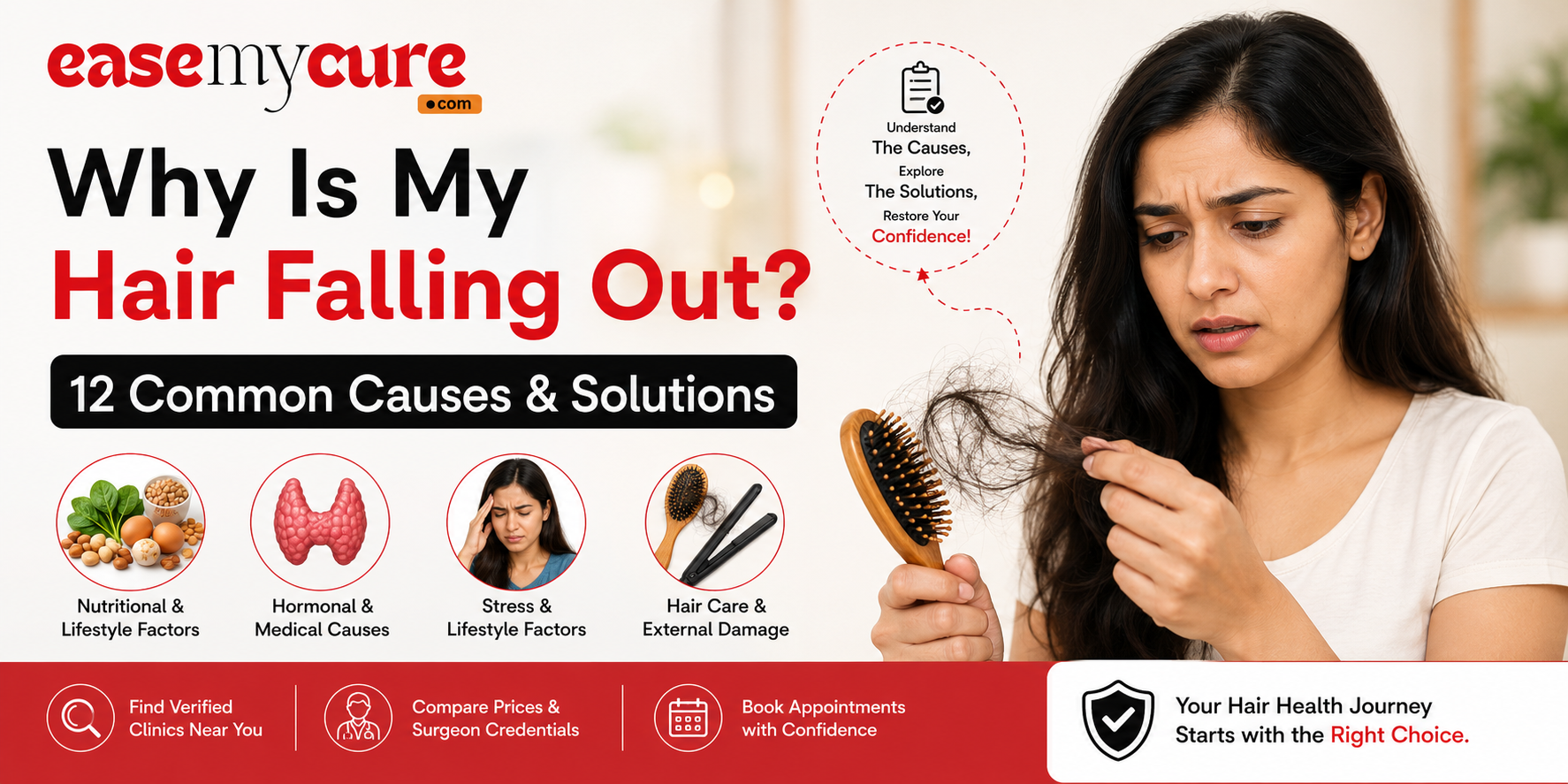

The discovery of increased hair strands on your pillow and bathroom drain blockage requires urgent investigation into your hair loss issue. Hair fall is one of the most common concerns which affects both men and women across all age groups. People should not become worried about their hair loss because they will experience some hair loss throughout their life. The good news? Most causes of Why is hair falling out India are identifiable and treatable. The process of restoring your hair health and achieving mental calmness starts with identifying your hair loss cause.
When Is Hair Fall “Normal” and When IS It a Problem?
Hair fall is a natural component of the hair growth cycle. On average, losing 50-100 hair per day is completely normal. Your scalp undergoes continuous renewal processes which involve the shedding of old hair strands to allow new hair to develop.
However, hair loss becomes a concern when you notice:
- You lose more than 100-150 strands through excessive shedding every day.
- Your hair shows visible thinning and your parting has expanded.
- You experience clump hair loss while washing or brushing your hair.
- You see any bald patches or a receding hairline.
India experiences seasonal shedding because of its monsoon and autumn seasons which bring high humidity along with changing environmental conditions. People should start looking for underlying reasons and make necessary changes if their hair loss continues for more than 3 months.
Causes 1-4: Nutritional and Lifestyle Factors
People often overlook poor nutrition and lifestyle imbalance as reasons why is hair falling out India. Essential nutrients are required by your hair to achieve growth and maintain its strength.
- Iron Deficiency:
Low iron levels reduce oxygen supply to hair follicles which leads to excessive hair shedding that occurs most frequently among Indian women.
2. Protein Deficiency:
Hair consists of keratin protein. Your hair strands will become weaker and slow down their regrowth process when you do not consume enough protein.
3. Crash Dieting:
The body experiences a shock when people attempt to lose weight quickly through strict diet plans which causes their hair follicles to enter a resting state that leads to hair loss.
4. Extreme Stress:
The hair cycle experiences disruption from physical or emotional stress which occurs during illness or exams or when people experience major life changes.
The good news? The causes of this condition can be reversed through proper nutrition and stress management and lifestyle changes.
Causes 5-8: Hormonal and Medical Causes
Excessive hair loss causes are frequently due to hormonal imbalances, especially in India.
5. PCOS (Polycystic Ovary Syndrome):
PCOS leads to hair thinning as women's bodies produce more androgen hormones.
6. Thyroid Disorders:
Both hypothyroidism and hyperthyroidism disrupt normal hair growth cycles which results in diffuse hair loss.
7. Post-Pregnancy Hair Loss:
The body experiences significant hair loss after childbirth because of estrogen level drops which continue for three to six months.
8. Androgenetic Alopecia (Generic Hair Loss):
This hereditary condition causes hair loss through the action of DHT a hormone which leads to progressive hair thinning in women and balding or receding hairline in men.
Medical diagnosis is necessary for these conditions because effective treatment outcomes require targeted medical treatment.
Causes 9-12: Hair Care and External Damage
Sometimes, your daily hair habits are the hidden culprit behind hair fall.
9. Over-Processing ( Coloring and Bleaching):
Frequent chemical treatments weaken hair shafts, making them prone to breakage.
10. Heat Damage:
Excessive use of straighteners, curlers and blow dryers strips moisture and damages hair structure.
11. Tight Hairstyles (Traction Alopecia):
Constant ponytails, buns or braids pull on hair roots, leading to gradual hair loss.
12. Scalp Infections:
Dandruff and fungal infections together with poor scalp hygiene create conditions which damage hair follicles and result in hair loss.
The implementation of milder hair care methods will provide users with a solution to decrease their hair loss because of damage which occurs during their daily routines.
How to Diagnose Your Hair Loss Type - Tests and Signs
Identifying the exact cause is crucial before starting any hair loss solutions India.
Scalp Examination:
A dermatologist examines your scalp condition, hair density and pattern of loss.
Blood Tests:
Common tests include iron levels, vitamin B12 ,thyroid profile and hormone panels to detect deficiencies or imbalances.
Hair Pull Test:
A simple test where a small section is gently pulled to check how many strands fall out.
TrichoScopy:
A detailed scalp analysis using a dermatoscope to evaluate follicle health and hair thickness.
Accurate diagnosis ensures you do not waste time or money on ineffective treatments.
Solutions by Cause - What to Do Next
The right treatment depends entirely on the underlying cause of hair loss.
Nutritional Fixes:
Increase intake of iron-rich foods (spinach, beetroot) protein ( eggs, paneer) and supplements if needed.
Hormonal Treatment:
Conditions like PCOS or thyroid disorders require medical management and medication.
Tropical Treatments:
Minoxidil is commonly prescribed to stimulate hair growth and slow thinning.
Advanced Therapies:
PRP (Platelet-Rich Plasma) therapy helps improve follicle health and regrowth.
Hair Transplant ( Advanced Cases):
For permanent hair loss, a transplant offers long-term results. You can easily find a hair transplant clinic on EaseMyCure.