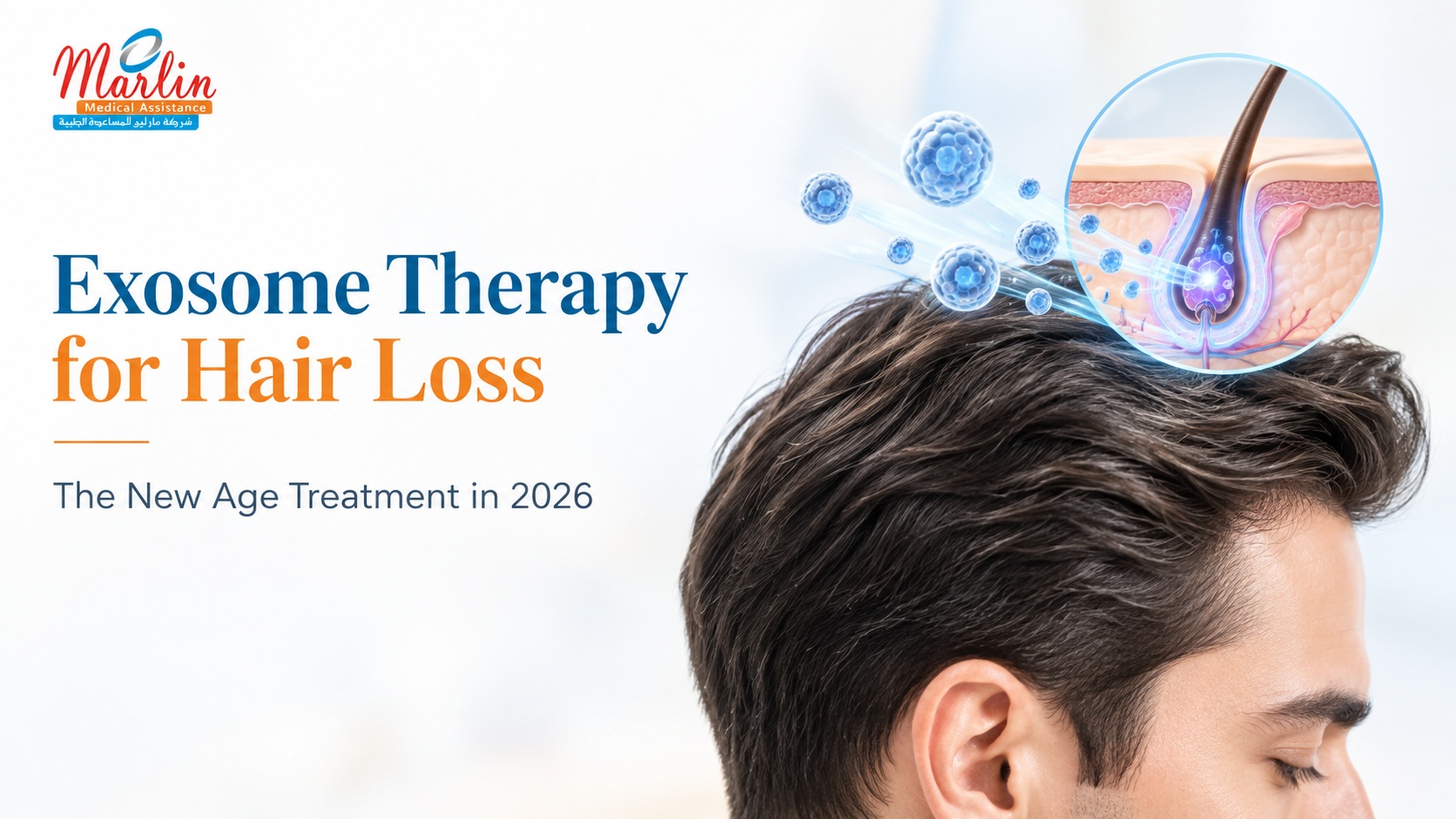

There is a new generation of hair loss treatment quietly taking over India's top clinics in 2026 exosome therapy, As per hair loss experts the trend for exosome therapy hair loss India is quickly moving beyond symptom management to promoting active cellular regeneration.
They say that for years traditional remedies such as Minoxidil vs Hair Transplant have been the first choice for many. But now in 2026 the microscopic “messenger” vesicles are a new approach that dermatologists in Delhi and other metro cities of India are turning to for hair rejuvenation. It's a transition to “cell free” regenerative medicine and it's a high tech alternative for those who want density without invasive surgery.
What Are Exosomes and How Do They Work for Hair Loss?
The body's internal communication system is made up of Exosomes, which are nano-sized extracellular vesicles (typically 30-150 nm). Exosome therapy does not involve the injection of live cells like stem cell therapy does, but rather only the bioactive “messages” that the cells produce. These vesicles contain growth factors, signalling lipids and specific microRNAs that target the Wnt/β-catenin pathway, which is a key switch for cycling in the hair follicles.
The superiority of exosomes is that they have a higher ability to cross biological barriers than larger cells do. They are injected into the scalp and they deliver a payload of signaling proteins such as VEGF (Vascular Endothelial Growth Factor) and TGF-β3. These proteins are not only "food" for the hair, but they also reprogram the local environment. Exosomes target the dermal papilla cells in the base of the hair follicles directly, stimulating the growth of new blood vessels and extending the growth (anagen) phase. This will re-stimulate follicles that have miniaturized, effectively "rebooting" the cycle of hair production. They are not as likely to be rejected or immunogenic as full-cell transplants, since they lack a nucleus and DNA.
Exosome vs PRP - How Do They Compare?
Both are examples of regenerative medicine, but have very distinct strengths and workflows. PRP Therapy for Hair Loss is based on separating a patient's blood, spinning it in a centrifuge, and then re-injecting the concentrated platelets. Despite being effective, PRP's quality is only as good as the patient's general health, age, and number of platelets as of course, an older patient's blood will have less growth factor.
By contrast, exosome hair treatment 2026 treatments typically use exosomes purified from the lab made from the Mesenchymal Stem Cell (MSC), which may contain up to 1,000 times as much growth factors as normal PRP.